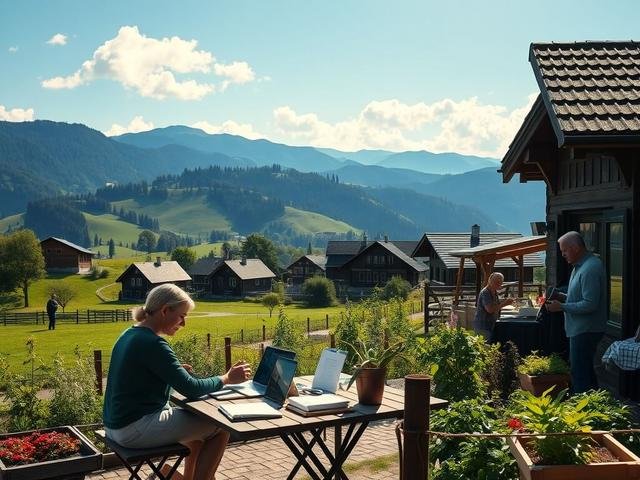
Budget Deficit Grows: Can Austria''s Austerity Plan Hold? Austria, known for its picturesque landscapes and high standard of living, faces a tough economic challenge: a growing budget deficit. This problem calls into question the effectiveness of the current austerity plan and demands careful analysis. How long can the country sustain its... Topics: News, Economy.
Budget Deficit Grows: Can Austria’s Austerity Plan Hold?
Austria, known for its picturesque landscapes 🏞️ and high standard of living, faces a tough economic challenge: a growing budget deficit. This problem calls into question the effectiveness of the current austerity plan and demands careful analysis. How long can the country sustain its social standards and economic stability amid a rising deficit? 🤔 Let’s examine what factors drive Austria’s budget deficit and what measures are being taken to reduce it. What Is a Budget Deficit and Why Does It Matter? 🧐 A budget deficit occurs when the government spends more money than it collects in taxes and other revenue. Simply put, it’s when “expenses exceed income.” To finance the deficit, the government has to borrow, which increases the national debt. Why does this matter? 🤷♀️ A large budget deficit can lead to several negative consequences: Inflation 💸: Increasing the money supply to cover the deficit can drive up prices. Rising interest rates 📈: The government may have to offer higher interest rates on bonds to attract investors. Cuts in public spending ✂️: To reduce the deficit, the government may cut funding for important social programs like healthcare and education. Economic instability ⚠️: High national debt can undermine investor confidence and lead to economic instability. Factors Driving Austria’s Budget Deficit 🇦🇹 Austria’s budget deficit is shaped by many factors, both domestic and external.
Understanding these factors is critical for developing effective deficit-management strategies. Domestic Factors Social spending: Austria has a well-developed social welfare system, including generous unemployment benefits, pensions, and healthcare. These expenditures make up a significant portion of the state budget. Aging population: Like many other European countries, Austria faces an aging population. This means more people are retiring and fewer people are paying taxes, putting pressure on the budget. Economic growth: Slowing economic growth can reduce tax revenue and increase social payouts, worsening the deficit. External Factors Global economic crises: Global crises such as the 2008 financial crisis or the COVID-19 pandemic can have a serious impact on Austria’s economy and increase the deficit. European Union policy: Austria is an EU member and must comply with certain fiscal rules. For example, under the EU Stability and Growth Pact, the budget deficit must not exceed 3% of GDP. Inflation and rising energy prices: As an article on ORF notes, inflation and rising energy prices have a significant impact on Austria’s economy, increasing costs and reducing purchasing power. Austria’s Austerity Plan: What Does It Include? 💰 To tackle the growing budget deficit, the Austrian government has developed an austerity plan that includes a range of measures aimed at cutting spending and increasing revenue.
Key Austerity Measures
Ministry spending cuts: The government plans to reduce spending across various ministries and agencies. Tax increases: Possibilities for raising taxes on certain activities or incomes are being considered. Pension reform: Due to the aging population, pension reforms are being discussed, aimed at raising the retirement age and reducing pension payouts. Tackling tax evasion: The government intends to step up the fight against tax evasion and the shadow economy. As an article on Der Standard notes, despite the measures taken, the budget deficit in 2023 remains significant. Criticism and Challenges to the Austerity Plan 📢 The Austrian government’s austerity plan sparks considerable debate and criticism. Some experts believe the measures are insufficient to substantially reduce the deficit. Others fear that cuts in public spending could negatively affect the social sector and economic growth. Possible Consequences of the Austerity Plan Cuts to social programs: Reduced funding for healthcare, education, and other social programs could lead to a decline in service quality and negatively affect citizens’ lives. Slower economic growth: Reducing government spending can lower demand in the economy and slow growth. Rising social tensions: Austerity measures may cause public discontent and increase social tension. As noted in an article on Die Presse, it is necessary to consider all possible consequences of the austerity plan and take steps to mitigate negative effects.
Alternative Approaches to Managing the Budget Deficit 💡
Beyond traditional austerity measures, there are other approaches to managing the budget deficit. Investing in the Future Education and science: Investment in education and science can boost labor productivity and economic competitiveness in the long term. Infrastructure: Developing infrastructure such as roads, railways, and the internet can drive economic growth and create jobs. Green economy: Investment in renewable energy and energy efficiency can reduce dependence on energy imports and create new business opportunities. Structural Reforms Simplifying the tax system: A simpler tax system can reduce administrative costs and improve tax collection. Reducing bureaucracy: Less bureaucracy can lower costs for businesses and stimulate economic growth. Improving government efficiency: More efficient public administration can cut costs and improve the quality of public services. Conclusion and Key Takeaways The budget deficit in Austria is a serious problem that requires a comprehensive approach. The government’s austerity plan aims to cut spending and boost revenue but sparks considerable debate and criticism. It is important to consider all possible consequences of the austerity plan and take steps to mitigate negative effects. Alternative approaches to deficit management — such as investing in the future and structural reforms — can contribute to sustainable economic growth and an improved quality of life for citizens.
What do you think about the prospects for the Austrian economy? 🤔
If this article was useful, share it with your friends! 📢
Stay Up to Date with the Latest Austrian News
The week's top stories — news, guides, and insights about life in Austria. Every Sunday in your inbox.