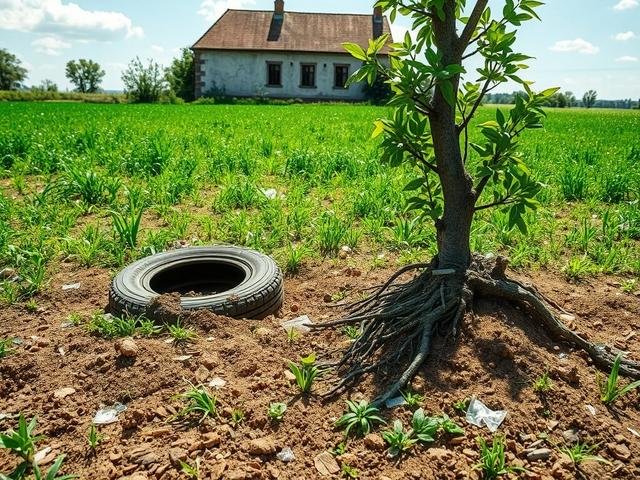
Microplastics in Soil: The Hidden Threat from Tires and Building Facades Have you ever wondered what happens to the microscopic particles that silently settle in our gardens? Microplastics from car tires and building facades are among the primary sources of soil contamination. Topics: News, Economy.
Microplastics in Soil: The Hidden Threat from Tires and Building Facades
Have you ever wondered what happens to the microscopic particles that silently settle in our gardens? Unfortunately, even in a corner of nature like your vegetable patch, an invisible danger may be lurking: microplastics. Car tires and building facades, seemingly far removed from your garden beds, are among the primary sources of microplastic soil contamination. How does this happen and what are the consequences? Let’s find out!
Microplastics in soil are a serious environmental problem that demands our attention. After all, soil purity directly affects our health and the well-being of future generations.
What Is Microplastic and How Does It End Up in Our Gardens?
Microplastics are tiny plastic particles less than 5 millimeters in size. They enter the environment through various pathways, including:
Tire wear:
As vehicles move, tires gradually wear down, producing microscopic rubber particles that are carried by wind and rain.
Degradation of building facades:
Many building facades are coated with plastic-based materials that break down over time due to weather exposure.
Agriculture:
The use of plastic films and other materials in farming also contributes to microplastic contamination of the soil.
Improper waste disposal:
Incorrectly disposed plastic waste breaks down into smaller particles and enters the soil.
Why Are Microplastics in Soil a Problem?
Microplastics pose a serious threat to both the environment and human health. Here are just some of the negative consequences:
Soil contamination:
Microplastics accumulate in the soil, disrupting its structure and fertility.
Entry into the food chain:
Microplastics can be absorbed by plants and animals, eventually making their way into the human body through food.
Impact on human health:
Studies show that microplastics can cause inflammatory processes, hormonal disruptions, and other health problems.
How to Protect Your Garden from Microplastics
While it is nearly impossible to completely prevent microplastics from entering the soil, there are several ways to reduce the risk of contamination:
Use natural materials:
Opt for natural materials for mulching and soil fertilization.
Avoid plastic films:
Replace plastic films with alternative materials such as straw or cardboard.
Dispose of waste properly:
Ensure that plastic waste is disposed of correctly to prevent it from entering the environment.
Plant species that can accumulate plastic:
Some plants, such as sunflowers, have the ability to accumulate microplastics in their tissues.
Install filters on drainage pipes:
Filters can help capture microplastics washed off roofs and building facades.
What Do Studies Say?
According to an article on the Umweltbundesamt website, tires and facades are among the significant sources of microplastics. As noted in an article on the European Commission platform, it is necessary to reduce plastic use and improve recycling methods. An article on Helmholtz-Zentrum fur Umweltforschung emphasizes the importance of further research to fully understand the impact of microplastics on the environment and human health.
What Else Can Be Done?
Beyond individual measures, it is important for authorities and manufacturers to take steps to reduce microplastic pollution. This includes:
- Developing and implementing more environmentally friendly materials for tire and facade production.
- Improving wastewater treatment systems.
- Conducting research to assess the impact of microplastics on the environment and human health.
- Raising public awareness about the microplastics problem.
Conclusion
Microplastics in soil are a serious problem that requires our attention. Tires and building facades, agriculture, and improper waste disposal are all sources of contamination that threaten our environment and health. By taking simple measures such as using natural materials and properly disposing of waste, we can reduce the risk of contamination and protect our gardens and farmland.
If you found this article helpful, share it with your friends!
Stay Up to Date with the Latest Austrian News
The week's top stories — news, guides, and insights about life in Austria. Every Sunday in your inbox.