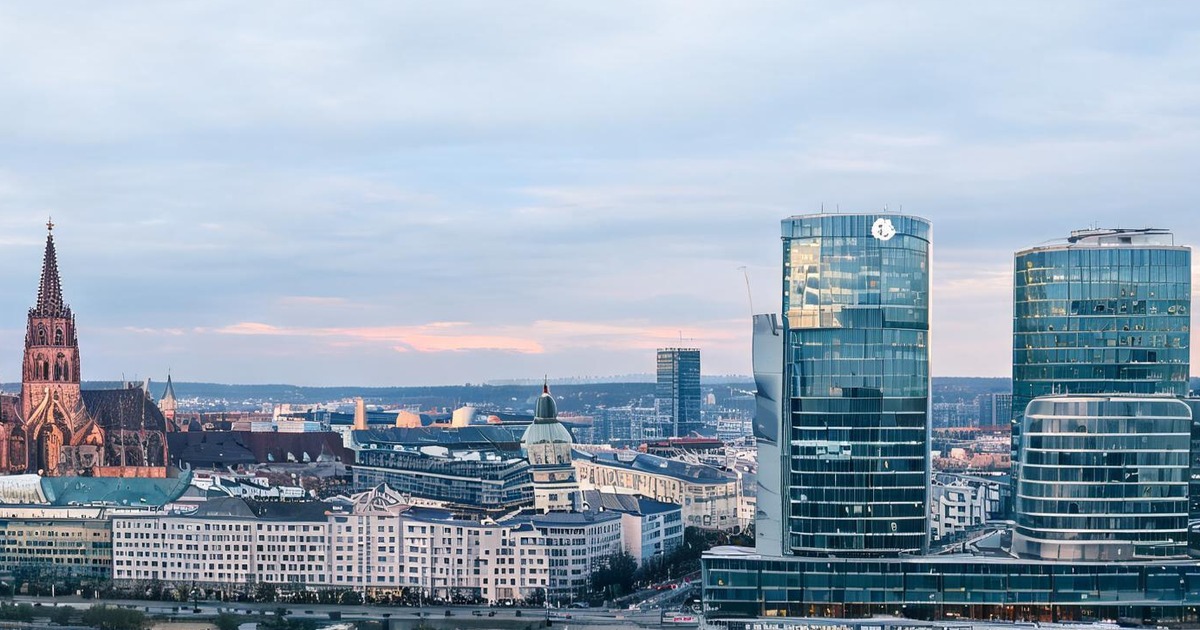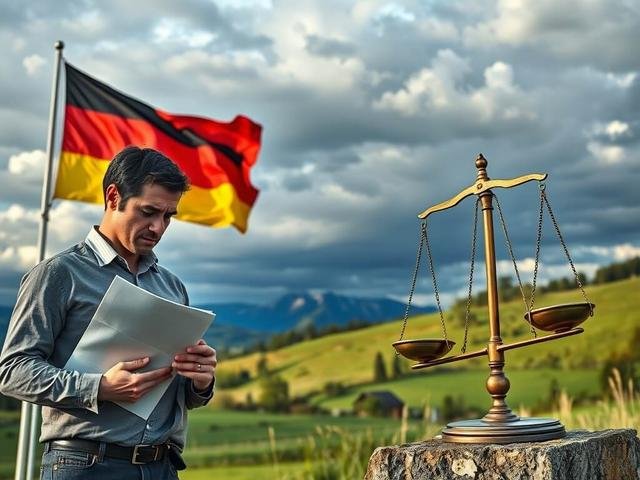
Customs Conflict: Germany on the Brink of Recession Can trade disputes really bring down Germany's economy? Many experts agree: yes. In a world of global interdependence, where supply chains stretch across thousands of kilometers and German goods are in high demand worldwide, any serious disruption in trade could have catastrophic consequences... Topics: News, Economy.
Customs Conflict: Germany on the Brink of Recession
Can trade disputes really bring down Germany’s economy? 🇩🇪 Many experts agree: yes. In a world of global interdependence, where supply chains stretch across thousands of kilometers and German goods are in high demand worldwide, any serious disruption in trade could have catastrophic consequences. In this article, we’ll examine how the customs conflict threatens to push Germany into recession and which factors play a key role. Customs wars and their impact on the German economy ⚔️ As Europe’s largest economy and one of the world’s leading exporters, Germany is particularly sensitive to any changes in global trade policy. Customs conflicts arising between countries lead to increased import and export costs, directly affecting the competitiveness of German businesses. The role of an export-oriented economy 🌍 The German economy is traditionally export-oriented. Cars, machinery, chemicals — all of these are in huge demand abroad. However, if other countries impose tariffs on German goods as a result of a customs conflict, it leads to a decline in export volumes and, consequently, a slowdown in economic growth. Impact on individual industries 🏭 The negative effects of customs conflicts are especially felt in industries closely tied to international trade. For example, the automotive industry, one of the engines of the German economy, heavily depends on supplies of components from various countries. Imposing tariffs on these components increases production costs and reduces profitability.
Factors exacerbating the situation 📉
In addition to the direct consequences of customs conflicts, there are other factors that could worsen Germany’s economic situation. Brexit and its consequences 🇬🇧 The UK’s departure from the European Union (Brexit) is also having a negative impact on the German economy. The UK was one of Germany’s key trading partners, and after Brexit, trade relations between the two countries became more complicated, leading to reduced trade volumes. Energy crisis ⚡️ Rising energy prices, driven by geopolitical instability, are also negatively affecting the German economy. Energy-intensive industries, such as chemicals and metallurgy, are forced to cut production due to high electricity costs. As noted in a Deutsche Welle article, the energy crisis has dealt a serious blow to the competitiveness of German businesses. Inflation and declining consumer demand 💸 Inflation, driven by rising energy and goods prices, leads to a decrease in purchasing power. People start spending less, which negatively impacts retail and other sectors of the economy. What can be done? Possible ways out of the crisis 💡 To avoid a recession, Germany needs to take a number of measures. Diversification of export markets 🌏 Germany should strive to diversify its export markets to reduce dependence on individual countries or regions. It is necessary to develop trade relations with new promising markets, such as those in Asia and Africa.
Investment in innovation and technology 🚀
To improve the competitiveness of the German economy, investment in innovations and new technologies is essential. Developing the digital economy, artificial intelligence, and other cutting-edge technologies will help create new jobs and boost productivity. Support for small and medium-sized businesses 🏢 Small and medium-sized enterprises (SMEs) play an important role in the German economy. The government should support SMEs by providing subsidized loans, grants, and consulting services. SMEs have great potential for creating new jobs and driving innovation. Conclusion and key takeaways Customs conflicts pose a serious threat to the German economy and could lead to recession. To avoid negative consequences, Germany needs to take active measures to diversify export markets, invest in innovation, and support small and medium-sized businesses. Will Germany be able to cope with these challenges? 🤔 If you found this article helpful, share it with your friends! 📢
Stay Up to Date with the Latest Austrian News
The week's top stories — news, guides, and insights about life in Austria. Every Sunday in your inbox.