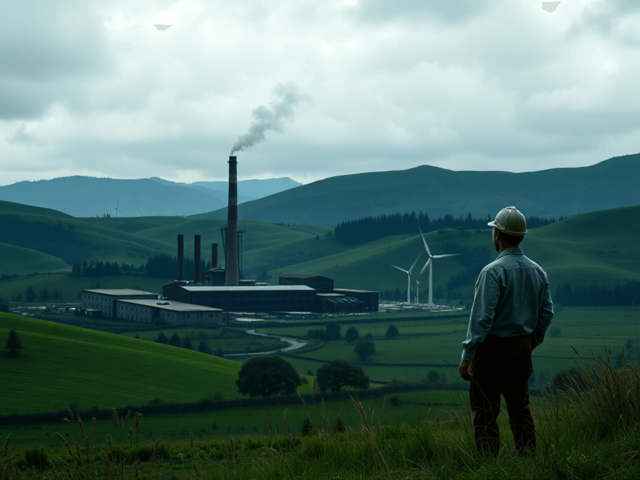
Austrian Industry in Crisis: What Do the Numbers Say?
Austrian Industry in Crisis: What Do the Numbers Say? Austrian industry is going through a rough patch. Recent data points to a serious downturn, raising concerns among economists and business owners. How long will this crisis last, and what measures could help the Austrian economy? Let's break it down based on the latest reports and expert opinions. Topics: Work, Labor Market.
📉 Austrian Industry in Crisis: What Do the Numbers Say?
Austrian industry is going through a rough patch. 🏭📉 Recent data points to a serious downturn, raising concerns among economists and business owners. How long will this crisis last, and what measures could help the Austrian economy? 🤔 Let’s break it down based on the latest reports and expert opinions.
What’s happening with Austrian industry?
The last few months have been tough. Orders are down, production is falling, and growing uncertainty in global markets is weighing heavily on the sector. 📊
📉 Causes of the downturn
Several key factors are behind the slump:
- Global economic instability 🌍 — International crises, trade disputes, and geopolitical tensions are putting pressure on Austria’s export-driven economy.
- Rising energy prices ⚡️ — High costs for gas and electricity are driving up production expenses and hurting competitiveness.
- Shortage of skilled labor 👨🔧 — Many companies are struggling to find qualified workers, which slows down growth and innovation.
- Sanctions and counter-sanctions 🚫 — Trade restrictions with certain countries are affecting both exports and imports.
📊 Data and numbers
According to the latest figures, Austria’s industrial production index has dropped significantly year-on-year. 📉 Sectors like metallurgy, mechanical engineering, and chemicals have been hit the hardest. 🏭 As reported by ORF, the industrial slump is also affecting the job market, driving up unemployment in some regions.
How does this affect everyday Austrians?
The industrial crisis doesn’t stay in the factory halls — it trickles down to daily life. 😟
💸 Rising prices and inflation
Lower industrial output can lead to higher prices for goods and services. Inflation, already noticeable in Austria, could get worse, eating into people’s purchasing power. 🛒
💼 Job losses
Production cuts often mean layoffs. 😔 Many Austrians are worried about their future and the stability of their income.
🏘️ Regional impact
Some regions where industry plays a key role are suffering more than others. Factory closures and reduced investment are worsening the economic outlook in those areas. 🌍
What to do? Expert opinions
Experts are proposing various measures to tackle the crisis. 💡
🇦🇹 Government support
Many economists believe the government should step in with financial aid, tax breaks, or retraining programs for affected workers. 💰
💡 Innovation and modernization
Investing in innovation and modernizing production could help Austrian companies become more competitive globally. 🚀 As noted in an article by Der Standard, policymakers need to address these issues and develop a clear strategy.
🌍 Market diversification
Looking toward new markets and expanding export destinations could reduce the Austrian industry’s reliance on unstable regions. 📈
Conclusion
Austrian industry is facing serious challenges that need immediate and effective solutions. 🚨 The production slump, rising prices, and threat of job losses are all taking a toll on the economy and people’s lives. Government, businesses, and experts need to join forces to overcome the crisis and ensure sustainable growth. 🤝 The Austrian economy needs fresh ideas and approaches to adapt to changing conditions and remain competitive. 🌍
If you found this article useful, share it with your friends! 📢
Stay Up to Date with the Latest Austrian News
The week's top stories — news, guides, and insights about life in Austria. Every Sunday in your inbox.


