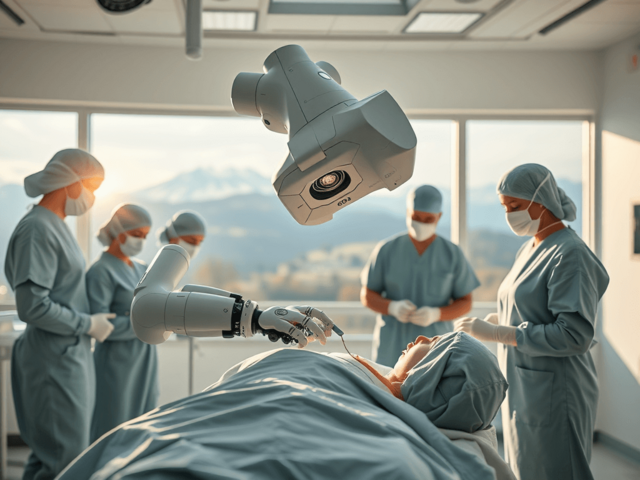
First Robotic Surgery in Oberwart: A New Era in Medicine Medicine is undergoing a genuine revolution, and Austria is not staying behind! Have you ever wondered how robots can help surgeons perform complex operations? Klinik Oberwart became a pioneer in this field by performing the country's first robotic surgery. Topics: Daily Life, Healthcare.
First Robotic Surgery in Oberwart: A New Era in Medicine
Medicine is undergoing a genuine revolution, and Austria is not staying behind! Have you ever wondered how robots can help surgeons perform complex operations? Klinik Oberwart became a pioneer in this field by performing the country’s first robotic surgery. This event is not just news — it is an important step forward for the entire Austrian healthcare system. Let us explore what this means for patients and how it is changing the future of medicine in Austria.
Robotic Surgery in Austria: Klinik Oberwart Sets the Standard
Robotic surgery is not science fiction — it is a reality that is becoming increasingly accessible. Klinik Oberwart in Burgenland became the first hospital in Austria to introduce this advanced technology. This opens up new possibilities for treating various conditions with greater precision and less risk for patients.
What Is Robotic Surgery?
Robotic surgery is a method of performing operations using a surgical robot controlled by a surgeon. The robot is equipped with cameras and instruments that allow the surgeon to view the surgical field in magnified form and perform manipulations with high precision.
Advantages of robotic surgery:
- Smaller incisions: Operations are performed through small incisions, which reduces the risk of infection and speeds up recovery.
- High precision: The robot enables the surgeon to perform manipulations with great accuracy, minimizing damage to surrounding tissues.
- Enhanced visualization: Cameras provide a magnified and detailed image of the surgical field.
- Less pain and scarring: Patients experience less pain after surgery and are left with less noticeable scars.
Why Oberwart?
The selection of Klinik Oberwart as the first medical facility for robotic surgery in Austria is no coincidence. The region is actively investing in innovation and strives to provide patients with the most modern treatment methods. As reported by meinbezirk.at, this is an important step for the development of medicine in Burgenland.
How Does It Work?
The robotic surgery process involves several stages. The surgeon controls the robot using a special console while observing the surgical field on a screen. The robot translates the surgeon’s movements to the instruments positioned inside the patient’s body.
Stages of a robotic surgery:
- Preparation: The patient is prepared for surgery, and anesthesia is administered.
- Robot positioning: The surgical robot is positioned next to the operating table.
- Incisions: The surgeon makes small incisions to insert the robot’s instruments.
- Robot control: The surgeon operates the robot using the console, performing the necessary manipulations.
- Completion: The instruments are removed, and the incisions are closed.
The Future of Robotic Surgery in Austria
The first robotic surgery at Klinik Oberwart is only the beginning. In the coming years, robotic surgery is expected to become more widespread in Austria, and more patients will be able to benefit from its advantages. This opens new prospects for treating cancer, cardiovascular diseases, and other complex conditions.
As noted in an article on Kurier, robotic surgery can significantly improve treatment outcomes and patients’ quality of life.
Risks and Limitations
Despite all the advantages, robotic surgery also has its risks and limitations. It is important for patients to be aware of them and make an informed decision about their treatment method.
Key risks and limitations:
- High cost: Robotic surgery requires significant investment in equipment and staff training.
- Training requirements: Surgeons must undergo specialized training to work with the robot.
- Limited availability: Robotic surgery is not available in all hospitals and clinics.
- Possible complications: As with any surgery, complications such as infection or bleeding are possible.
Expert Opinion
Many experts believe that robotic surgery is the future of medicine. It allows surgeons to perform complex operations with greater precision and less risk for patients. However, it is important that this technology is used wisely and is accessible to everyone who needs it.
Conclusion
The first robotic surgery at Klinik Oberwart is an important step forward for Austrian medicine. This technology opens new possibilities for treating various conditions with greater precision and less risk for patients. Although robotic surgery has its limitations, it is expected to become more widespread and accessible in the future.
Stay Up to Date with the Latest Austrian News
The week's top stories — news, guides, and insights about life in Austria. Every Sunday in your inbox.